曾毅回复法
- Literally
- Zeng Yi style replying
- Meaning
- Answering a long lecture by repeating only its closing words, so the reply looks instant and commits to nothing
- Popular since
- 2026
What does 曾毅回复法 mean?
Three paragraphs of scolding come back as two characters and an exclamation mark. The method is exactly that: take the last words of the message you received and send them back unchanged. The name comes from 凤凰传奇, the duo where 玲花 carries the whole melody while 曾毅 waits at the end of a verse to repeat its final word, the 留下来 of 《最炫民族风》 being the case everybody recognises, so a reply built purely out of other people’s tails ended up with his name on it. People like it because it closes a conversation without opening one. Nobody can prove you ignored them, and nobody collects the emotional reaction they were fishing for, which is why the 百度百科 entry calls the trick formally responsive and practically empty. 已读乱回 answers nonsense with nonsense; this answers a sermon with a photocopy.
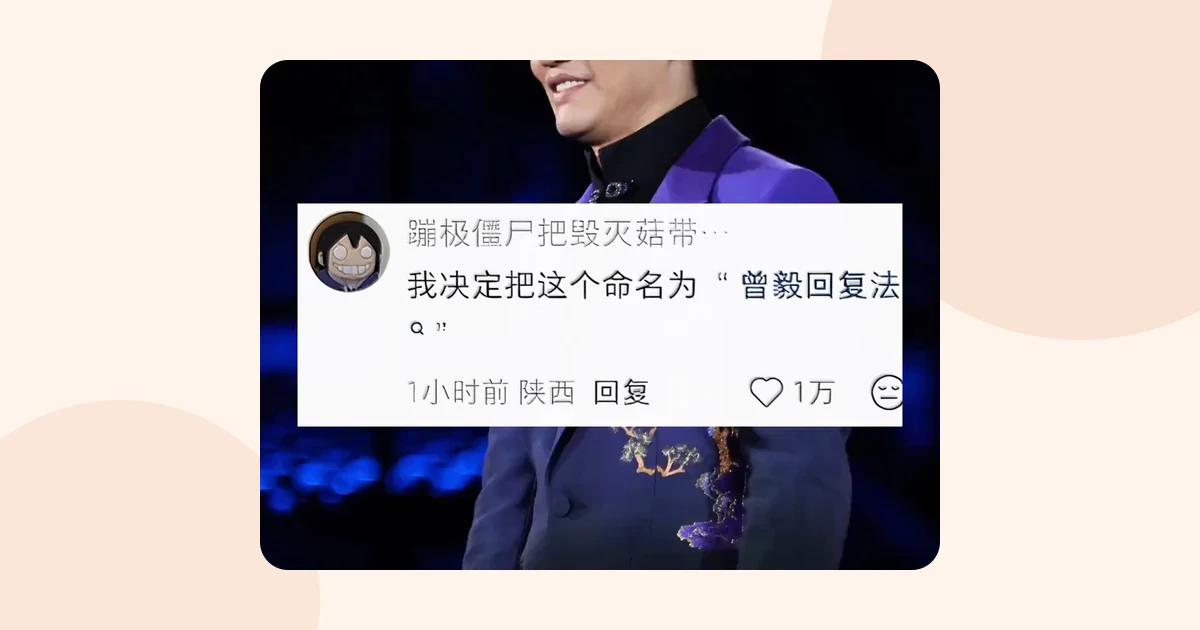
Where does 曾毅回复法 come from?
Mid October 2026 is when the label stuck. The 百度百科 entry for 曾毅式回复 records a poster who answered a father mixing demands for money with insults by replying to each message with its final word, and says the name was supplied in the comments. On 17 October 2026 北京时间 carried a gentler version: the account 乌拉尔大糯咪 described a university student who met a family group lecture about the 四六级 exams by sending back 没出路 and 良苦用心, the tails of her relatives’ sentences. A B站 clip dated 10 October 2026 had already been using the term, and by the following weekend 曾毅式回复突然火了 was sitting in Weibo’s trending list.
How to use 曾毅回复法
- 二舅在家族群里连发三条语音劝她考编,她回了一个“稳定”,群里安静了两分钟。
Èr jiù zài jiāzúqún lǐ lián fā sān tiáo yǔyīn quàn tā kǎobiān, tā huí le yí ge “wěndìng”, qún lǐ ānjìng le liǎng fēnzhōng.
Her second uncle sent three voice notes in the family group pushing her to sit the civil service exam, and she answered with one word, 稳定, which held the chat quiet for two minutes. - 妈妈发来八百字的小作文,她图省事回了“八百字”,发完抱着手机后悔到半夜。
Māma fā lái bā bǎi zì de xiǎozuòwén, tā tú shěngshì huí le “bā bǎi zì”, fā wán bào zhe shǒujī hòuhuǐ dào bànyè.
Her mother wrote her an eight hundred word message and she, out of laziness, replied with 八百字, then lay awake all night regretting it.
Also available in: 简体中文 · 日本語 · 한국어 · Español · Français · Deutsch · Português · Italiano · Bahasa Indonesia
Comments
Have you run into this word in the wild? Share where you saw it, who said it, and what happened.