疯狂的鸽子
- Literally
- crazy pigeon
- Meaning
- The result-screen dance of an old casual game, played whether you won or lost, cut to a funk track and turned into a way of laughing at a mess
- Popular since
- 2026
What does 疯狂的鸽子 mean?
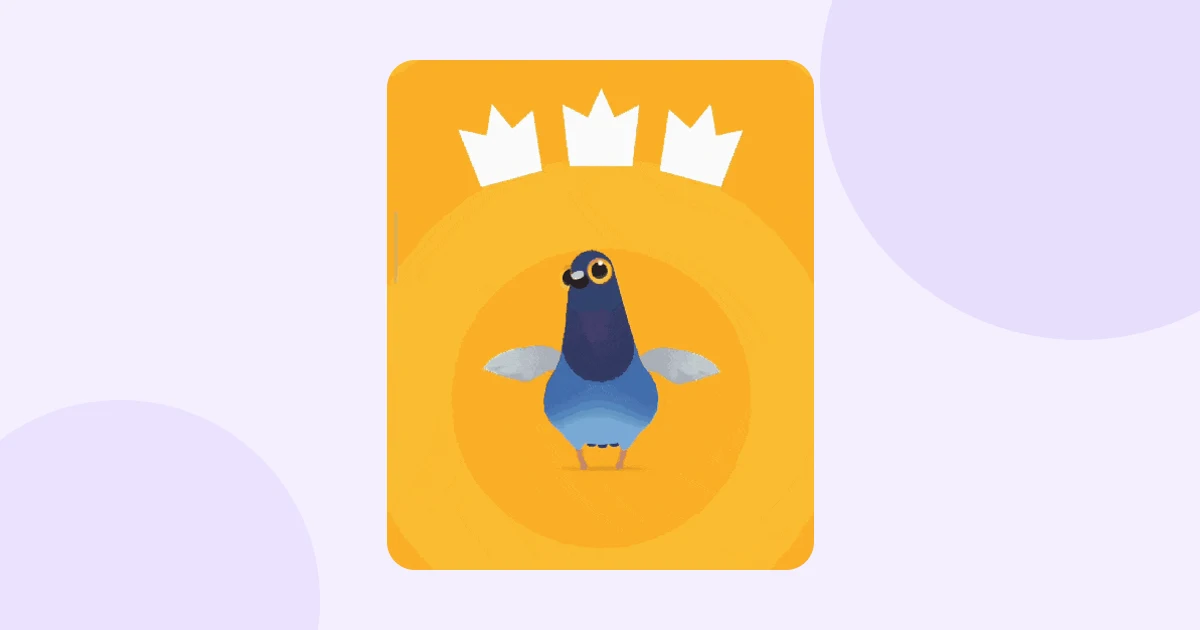
Not every meme is a sentence; some are a movement. In the mobile game Pigeon Pop you steer a bird to peck kernels off a turning plate and lose the round if it swallows something rotten. The result screen then ignores the outcome: win or lose, the pigeon rolls its shoulders, flicks its head and shakes itself apart. Chinese players named that animation 雷霆舞姿, the thunder dance, and the phrase 疯狂的鸽子 now sits on top of any clip where things have just come undone. It is a refusal to explain the disaster. The bird dances anyway, so the caption means: look, it is ridiculous, keep going.
Where does 疯狂的鸽子 come from?
Pigeon Pop is a casual mobile game from Fortafy Games that first went live in 2018, and 疯狂的鸽子 is the name Chinese players gave it. It was pulled after the French animator Kekeflipnote accused the pigeon dance of lifting his own looped animation, and it came back in altered form. In January 2026 users began cutting the result dance into beat-matched edits over the track UwU Funk, and a two-second loop buried in an old game became the meme that opened the Chinese internet’s year; the same dance then supplied stickers, remixes and a Douyin mini-game built on that mechanic. In the 从夯到拉 round-ups of 2026 it is almost always near the top.
How to use 疯狂的鸽子
- 加班到十一点,我在电梯里对着手机学那只鸽子的收尾动作,被新来的实习生撞见,第二天全组都在群里发鸽子。
Jiābān dào shíyī diǎn, wǒ zài diàntī lǐ duìzhe shǒujī xué nà zhī gēzi de shōuwěi dòngzuò, bèi xīn lái de shíxīshēng zhuàngjiàn, dì èr tiān quán zǔ dōu zài qún lǐ fā gēzi.
Working till eleven, I rehearsed the pigeon’s closing move in the lift on my phone, a new intern walked in on it, and by the next day the whole team was sending pigeons around the group chat. - 女儿把转盘那局打到最后一关,输了,还是站起来跳完那段舞,全家给她鼓掌。
Nǚ’ér bǎ zhuànpán nà jú dǎ dào zuìhòu yī guān, shū le, háishi zhàn qǐlái tiào wán nà duàn wǔ, quánjiā gěi tā gǔzhǎng.
My daughter played the spinning-plate round through to the last level, lost, and stood up to finish the dance anyway, while the whole family clapped for her.
Also available in: 简体中文 · 日本語 · 한국어 · Español · Français · Deutsch · Português · Italiano · Bahasa Indonesia
Related slang
- 从夯到拉cóng hāng dào lā
A five-rung grading ladder for rating anything, from 夯 (outstanding) at the top to 拉完了 (a total bust) at the bottom.
- 卡皮巴拉kǎ pí bā lā
China's 2024 spirit animal: the unbothered giant rodent.
- 哈基米hā jī mǐ
A cute nickname for cats, and a catchy nonsense word from a viral anime-inspired song.
- Jiren dancing
Stiff stomping animations of the Dragon Ball Super android Jiren, set to a mournful love-triangle song, imitated in real life and even on a calculator screen
Comments
Have you run into this word in the wild? Share where you saw it, who said it, and what happened.