吗喽
- Literally
- monkey (from Cantonese 马骝)
- Meaning
- The self-deprecating monkey every overworked young Chinese claims to be.
- Popular since
- 2023
What does 吗喽 mean?
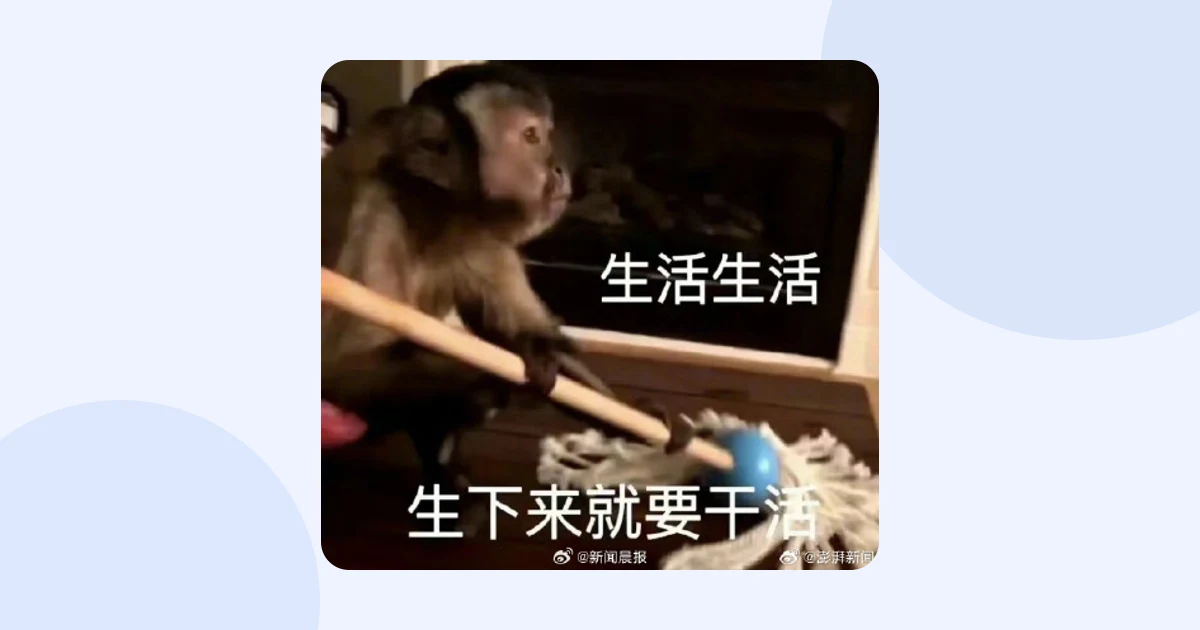
吗喽 is the jokey internet spelling of Cantonese 马骝, meaning monkey and pronounced maa1 lou1, and it is how China's overworked young describe themselves: no dignity, no savings, hustling for bananas. Monkey sticker packs took over group chats in 2023, and the line 吗喽的命也是命, “a monkey's life is a life too”, pushed the self-deprecation into something closer to a small protest. 牛马 is the other common word for the same overworked self-image.
Where does 吗喽 come from?
A 2023 Douyin remix carried Cantonese 马骝 into the Mandarin-speaking internet, riding monkey memes that were already circulating, and peaked during that year's season of work complaints. It settled in as the default self-mockery avatar of 打工人 culture and shows no sign of retiring.
How to use 吗喽
- 周一早上的我,就是只没睡醒的吗喽。
Zhōuyī zǎoshang de wǒ, jiùshì zhǐ méi shuì xǐng de ma lou.
Me on Monday morning is just a sleep-deprived monkey. - 吗喽的命也是命啊!
Ma lou de mìng yěshì mìng a!
A monkey's life is a life too!
Also available in: 日本語 · Español · 한국어 · 简体中文 · Français · Deutsch · Português · Italiano · Bahasa Indonesia
Related slang
- 卡皮巴拉kǎ pí bā lā
China's 2024 spirit animal: the unbothered giant rodent.
- 牛马niú mǎ
Self-mocking slang for overworked, underpaid employees who feel like beasts of burden.
- 窝囊文学wō náng wén xué
A deadpan literary genre that proudly narrates your own humiliations.
- 背手负鼠bèi shǒu fù shǔ
A cornered opossum photographed standing upright with its paws clasped behind its back, the stock image for looking composed while panicking
Comments
Have you run into this word in the wild? Share where you saw it, who said it, and what happened.